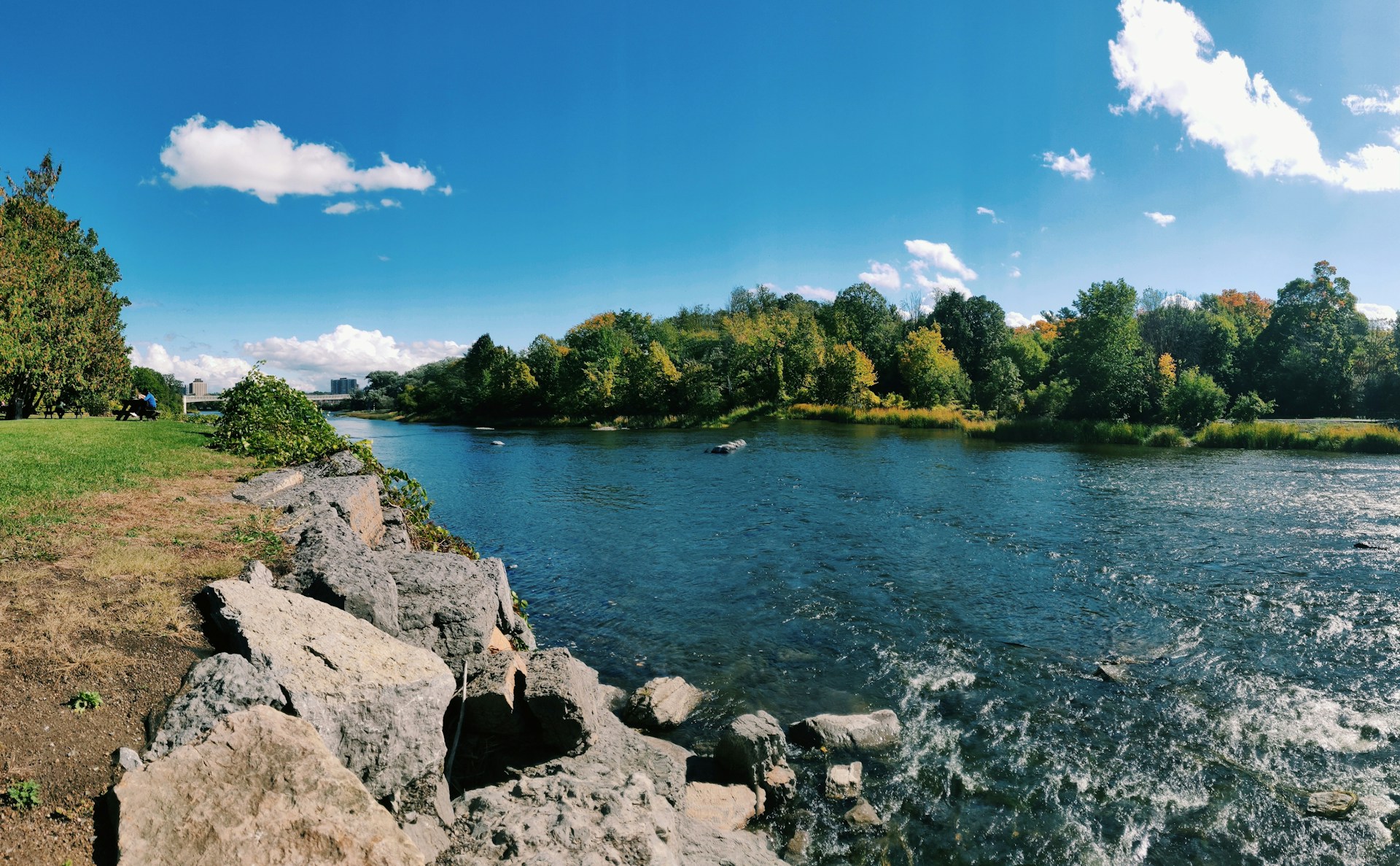
Has Your Reconciliation Action Plan Forgotten the River?
Reconciliation Action Plans in Canada rarely fail loudly. They are launched with an event, cited in an annual report, and then drift away from the decisions that shape relationships, operations, and impacts. Nobody cancels them. They simply stop mattering.
If you inherited one of those plans, this piece is for you. You may be the lead trying to make it operational, the executive who signed it, or the Indigenous employee asked to carry it without the authority or resources to do so.
We are not offering a checklist here. We are offering a few questions worth sitting with before your next reporting cycle.
Two vessels, and the water beneath them
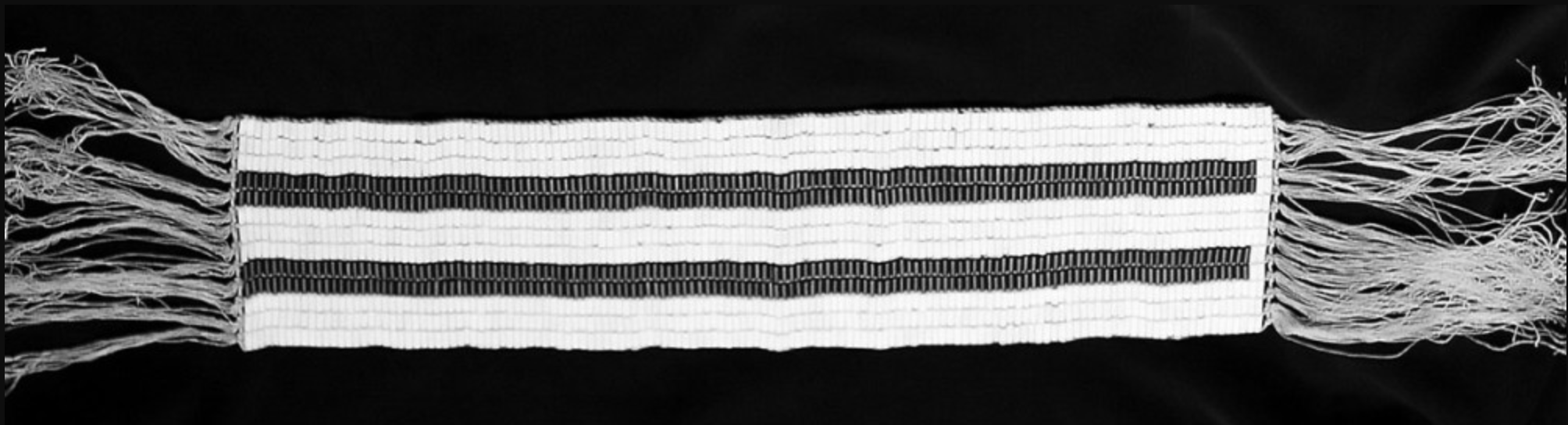
Our starting point is the Two Row Wampum, a Haudenosaunee diplomatic teaching. It is not a universal Indigenous framework. It does not replace the laws, protocols, and teachings of the Nations whose territories an organization affects.
What it names is a demanding principle of relationship: distinct peoples travel alongside one another without surrendering their own laws, responsibilities, or ways of being. The Two Row is often represented as two vessels travelling side by side in peace, friendship, and respect.
We extend that teaching to ask a contemporary question. What responsibilities does an organization carry for the lands and waters that make its work possible?
A plan that counts hires, training sessions, and sponsorships may recognize the two vessels. It may still forget the river.
Easier to publish than to verify
Canada has no national body that sets a common standard for RAPs, endorses them, or requires comparable reporting over time. So, no one can say how many succeed. The evidence that does exist is uncomfortable.
A May 2026 Yellowhead Institute report, Lifting the Curtain: The Theatre of Corporate Accountability and Indigenous Rights, reviewed publicly available disclosures for all 220 companies in the S&P/TSX Composite Index. Only 12 companies—about 5 percent—had published a Reconciliation Action Plan (RAP), and two of those plans applied only to Australian operations. The review also found that 27 percent of companies reported some engagement with Indigenous suppliers; only 13 percent disclosed the value of their spending with Indigenous suppliers, and just 3 percent disclosed an Indigenous procurement target.
Indigenous Watchdog rates Call to Action 92, the Truth and Reconciliation Commission’s call to the corporate sector, as “Not Started.” It downgraded that rating from “Stalled” in August 2025. The rating was unchanged as of October 3, 2026.
Australia has a national Reconciliation Action Plan program that Canada lacks: it sets out four defined stages—Reflect, Innovate, Stretch, and Elevate—and requires participating organizations to report annually to Reconciliation Australia. Yet Australia also has Juukan Gorge. In May 2020, Rio Tinto held the program’s highest status, an Elevate RAP, when it destroyed two rock shelters at Juukan Gorge containing evidence of more than 46,000 years of continuous human occupation. The shelters were of profound cultural and spiritual significance to the Puutu Kunti Kurrama and Pinikura (PKKP) peoples. The blast was lawful under Western Australian heritage legislation. On 9 June 2020, Reconciliation Australia revoked Rio Tinto’s endorsement as an Elevate RAP organization and suspended the company from the RAP program.
A plan can be highly rated and still be absent from the room where the decision is made.
Five questions worth sitting with
In our work we see ten recurring ways RAPs go wrong. Some concern how plans are built and where they sit in an organization. Others concern what plans leave out. We will not walk through all ten here. These five questions are drawn from them.
1. If your plan disappeared tomorrow, which decisions would be made differently?
Think of budgets, capital allocation, project approvals, procurement, and legal strategy. Call to Action 92 asks the corporate sector to apply the UN Declaration on the Rights of Indigenous Peoples to corporate policy and core operations. It does not confine reconciliation to human resources or charitable giving. If the honest answer is “none,” the plan sits beside the business, not inside it.
2. Are you reporting what you did, or what changed?
Staff trained, events held, dollars donated, and acknowledgements delivered are activities. They may matter, but they are not outcomes. Ask what will be different for a community, a relationship, a piece of land, or a waterway in five years because of them.
3. Who is carrying the plan, and with what?
Too often an Indigenous person is hired to lead reconciliation and finds no mandate, no budget, no staff, and no authority. A 2021 Catalyst survey of 86 Indigenous people working in Canada found that only 39 percent felt psychologically safe at work. The sample is small and is not a national estimate. It is still a caution. One person can lead coordination. One person cannot be the plan.
4. Could your plan be copied into another organization without anyone noticing?
A generic plan names no particular territories, treaty relationships, watersheds, or Nations. A credible one starts from the organization’s actual footprint: its operations, assets, investments, and supply chains, and the specific rights they may affect.
5. Where is the river in your plan?
Jobs, training, procurement, and cultural awareness matter. They say nothing about whether an organization’s operations, investments, or clients continue to harm land, water, cultural heritage, or Indigenous access. This is not only a question for mining and forestry. Banks, insurers, universities, and retailers enable and finance impacts too.
The test
The Two Row Wampum did not ask one vessel to climb aboard the other. It set out a relationship between distinct peoples travelling alongside one another.
A RAP that takes that seriously will say less about an organization’s generosity and more about its obligations. It will be specific about who holds rights, whose laws and priorities apply, where decisions are made, and what resources are committed. It will say how people can hold the organization to account when it falls short.
The test is not a polished report, a public event, or a strong annual narrative. The test is whether Indigenous rights are better respected, whether relationships are stronger and more accountable, and whether lands, waters, and coming generations are better cared for because of how the organization does business.
If these questions were harder to answer than you expected, that is useful information. It is also where the real work starts.
Áhskwa Consulting works with organizations at all stages of their reconciliation journey—from developing a Reconciliation Action Plan to strengthening an existing plan that may be difficult to define, govern, or put into practice. We help organizations move from intention to practical action in a way that is thoughtful, achievable, and grounded in meaningful relationships.
If your organization is developing a RAP, revisiting an existing one, or looking for support to put your commitments into practice, we welcome a conversation.
Blog Main Photo by: Unsplash - Shubham Sharan

Recent writings
Reflections on what we have learned